Best TTS APIs for developers in 2026: Top 7 text-to-speech services
When choosing a text-to-speech API (TTS), developers face crucial practical questions: Which provider delivers the right balance of latency, voice quality, control, and scalability in real production systems?
Automatic Speech Recognition (ASR): How speech-to-text models work—and which One to Use
Automatic speech recognition (ASR), aka speech-to-text (STT) technology, is a constantly evolving field. Knowing which ASR model is right for your product or service can be challenging. CTC, encoder-decoder, transducer, and speech LLMs—each with distinct tradeoffs. What does it all mean? And what do you choose?!
AssemblyAI vs Deepgram (vs Gladia): Which Speech-to-Text API should you choose in 2026?
Published on Jan 14, 2026
By Anna Jelezovskaia
Choosing between AssemblyAI and Deepgram for your speech-to-text needs often comes down to answering these critical questions:
Do you need real-time transcription with sub-300ms latency, or is batch processing sufficient for your use case?
Is your application primarily English-focused, or do you need robust multilingual support with code-switching capabilities?
How important is it that your audio data isn't used to train AI models without your explicit consent?
Are you building voice agents that need text-to-speech, or do you need LLM-powered analysis of your transcripts?
Does your business require European data residency for GDPR compliance?
In short, here's what we recommend:
👉 AssemblyAI excels at combining speech-to-text with large language model capabilities through its LeMUR framework. With features like automatic summarization and sentiment analysis, it's a strong option for developers who want to extract insights from audio.
However, the à la carte pricing for advanced features can add up quickly, and real-time transcription has been noted as a limitation, with latency and endpoint detection issues that make it less suitable for fluid conversational AI compared to their async offering. European users should also note that data routes through U.S. infrastructure.
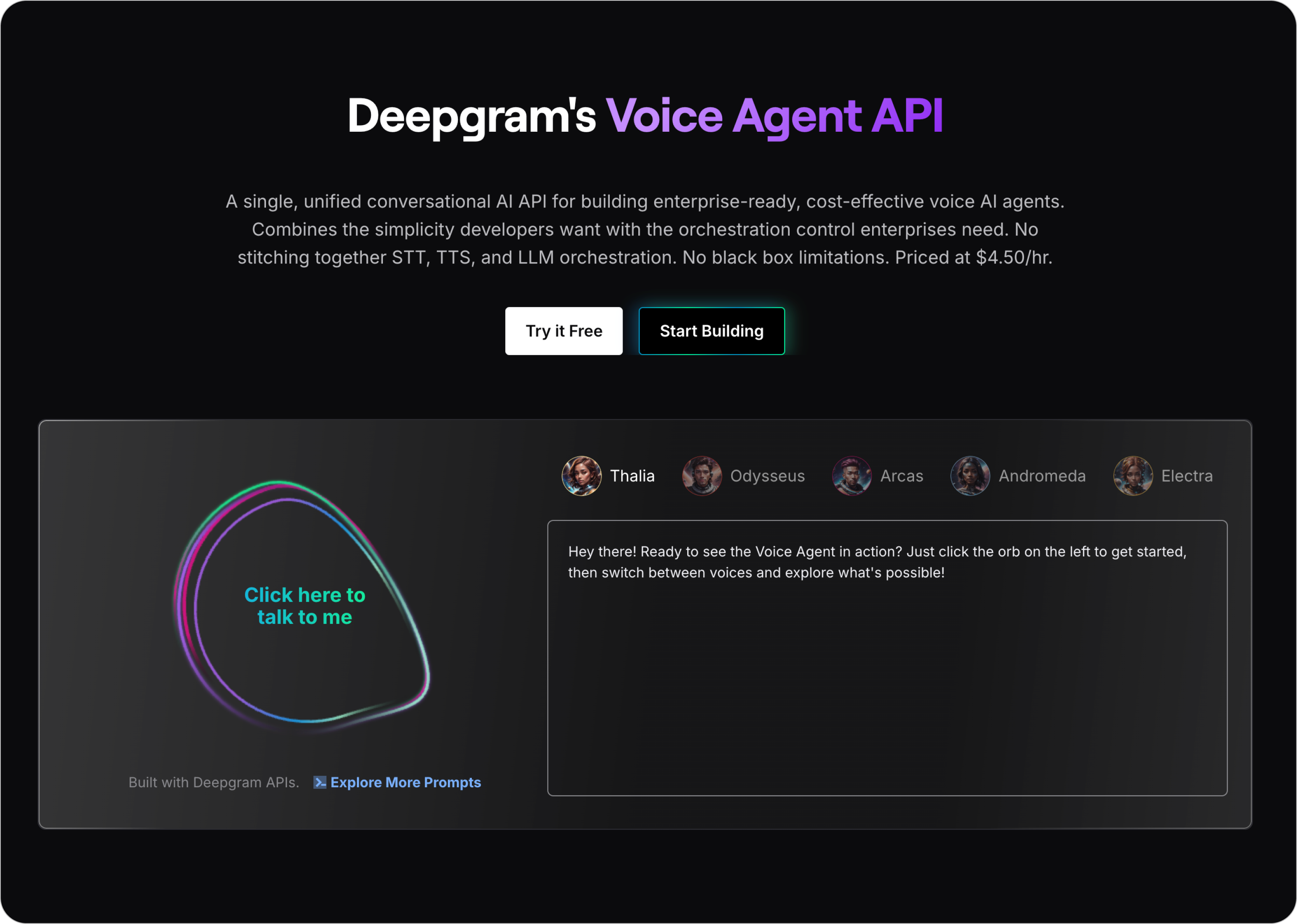
👉 Deepgram specializes in real-time voice applications with its Voice Agent API that unifies speech-to-text, text-to-speech, and LLM orchestration. Built on end-to-end learning, it delivers fast transcription with latency under 300 milliseconds. However, Deepgram is expanding into a full voice AI stack, which may create competitive tension if you're building voice agents yourself. Language support is more limited than some alternatives, and code-switching capabilities are constrained to specific language pairs. Additionally, achieving stable, low-latency streaming performance may require self-hosting.
Both platforms are well-established players in the speech-to-text space. However, they're also evolving into broader "voice AI" platforms, offering LLMs, text-to-speech, and end-to-end agent solutions. For teams building voice applications, this trajectory matters, as your STT provider could become your competitor.
👉 Gladia takes a different approach as a pure-play speech AI infrastructure provider. Rather than expanding into voice agents or LLMs, Gladia focuses exclusively on speech-to-text and audio intelligence, positioning itself as a partner that won't compete with customers building on top of it. In less than two years, with significantly fewer resources than key competitors, Gladia has built what independent benchmarks (Google FLEURS and Mozilla Common Voice) show to be a highly accurate, fast, and truly multilingual STT engine. The platform supports over 100 languages with native code-switching, uses proprietary models designed to reduce hallucinations with real-life, noisy audio, and doesn't use customer audio to retrain models.
For teams that need multilingual accuracy, transparent pricing, audio intelligence features like speaker diarization and sentiment analysis, or a provider that stays in its lane, Gladia is worth evaluating.
Table of contents:
AssemblyAI vs Deepgram vs Gladia at a glance
The speech-to-text API landscape has evolved
AssemblyAI combines transcription with LLM intelligence
Deepgram dominates real-time voice agent development
Gladia focuses on speech AI infrastructure
Pricing models reveal different priorities
Data privacy differentiates the players
Developer experience and integration matter
AssemblyAI vs Deepgram vs Gladia: Which should you choose?
AssemblyAI vs Deepgram vs Gladia at a glance
Speech AI Comparison Table
AssemblyAI
Deepgram
Gladia
Primary strength
LLM integration with audio
Real-time voice agents
Multilingual transcription infrastructure with bundled audio intelligence
Strategic direction
Audio intelligence platform
Full voice AI stack
Pure-play speech AI
Languages supported
99+ languages (async); 6 languages (real-time)
36+ languages
100+ languages
Code-switching
★★★★★ Limited
★★★★★ Limited language pairs
★★★★★ Native support, all languages
Real-time latency
★★★★★ ~300ms (noted limitations)
★★★★★ Under 300ms
★★★★★ Solaria-1: faster partial latency
Pre-recorded speed
★★★★★ 1hr in <2 min
★★★★★ 1hr in ~30 sec
★★★★★ 1hr in <60 sec
Data privacy
★★★★★ Opt-out available (paid)
★★★★★ Opt-out available (paid)
★★★★★ No model training on customer data
Text-to-speech
✗ Not available
★★★★★ Aura-2 model
✗ Not available
LLM integration
★★★★★ LeMUR framework
★★★★★ Voice Agent API
★★★★★ Via third-party integrations
Best for
Simple audio analysis and insights
Voice bots and agents
Global multilingual apps that need reliability above all else
¹ Prices shown are Pay-As-You-Go rates assuming participation in each provider's model improvement program. Deepgram prices based on Nova-3 model. AssemblyAI and Deepgram charge separately for features like speaker diarization, entity detection, and sentiment analysis. Gladia bundles these features in the quoted price.
The speech-to-text API landscape has evolved
The speech-to-text market has matured significantly since OpenAI released Whisper in 2022. What was once a straightforward choice between accuracy and speed has become a nuanced evaluation of specialized capabilities, integration options, data handling practices, and increasingly, strategic direction.
AssemblyAI, founded in 2017 by former Cisco machine learning engineer Dylan Fox, has grown into a well-funded platform with over $115 million in funding and more than 100 employees.
The company processes over 600 million API calls per month and has focused on combining transcription with LLM capabilities through its LeMUR framework.
Deepgram, the oldest of the three having been founded in 2015 by former University of Michigan physicists, has raised $85.9 million and employs around 175-200 people.
Their end-to-end learning approach and unified Voice Agent API position them prominently in real-time voice applications. The company is expanding beyond transcription into text-to-speech and LLM orchestration.
Gladia, the newest entrant founded in 2022 with headquarters in Paris and New York City, has quickly established itself with $20.3 million in funding, over 300,000 users, and more than 2,000 enterprise customers.
The company was founded by Jean-Louis Queguiner, an ex VP of AI at OVH (Europe's largest cloud provider), whose frustration with existing services failing to accurately understand his French accent highlighted broader bias in speech recognition models. Unlike its competitors, Gladia has explicitly committed to remaining a pure-play speech AI infrastructure provider rather than expanding into the broader voice AI stack.
This strategic divergence matters. Teams building voice agents, meeting assistants, or other voice-enabled products need to consider whether their STT provider might eventually compete with them. Deepgram's Voice Agent API and AssemblyAI's LeMUR framework both indicate competitive moves. Gladia's decision to stay focused on transcription and audio intelligence infrastructure means it positions itself as a partner rather than a potential competitor.
AssemblyAI combines transcription with LLM intelligence
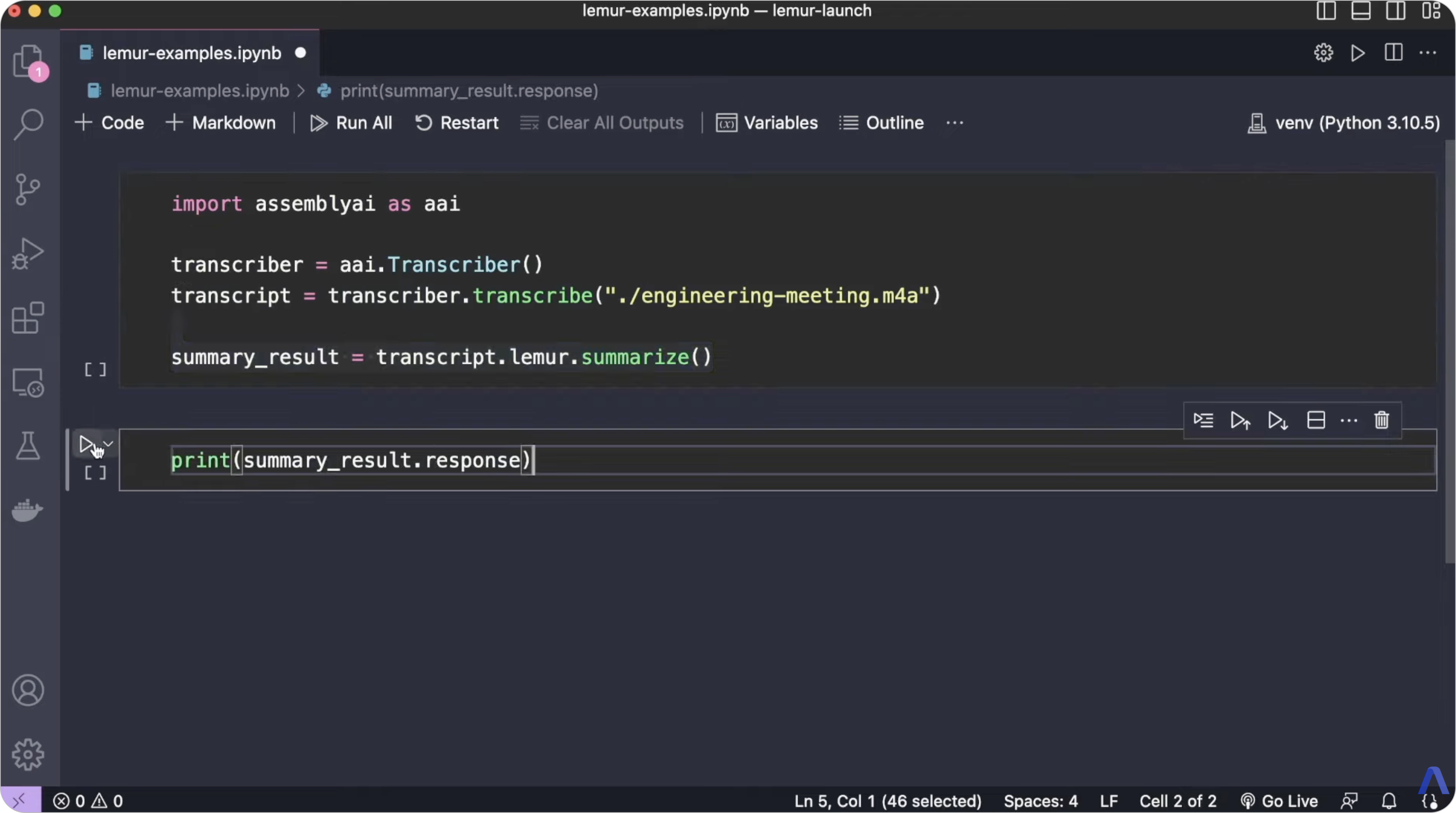
AssemblyAI's core differentiator is its LeMUR framework, which stands for Leveraging Large Language Models to Understand Recognized Speech.
This framework allows developers to apply large language models directly to transcribed audio data, enabling advanced analysis that goes beyond basic transcription.
The platform can process up to 10 hours of audio in a single API call through LeMUR, which is roughly equivalent to 150,000 tokens. This addresses a common limitation where standard LLMs struggle with the volume of text produced by long audio recordings. Users can ask questions about their audio content, generate custom summaries, extract action items, and perform other LLM-powered tasks.
AssemblyAI's Audio Intelligence features include speaker diarization, sentiment analysis, topic detection, PII redaction, and auto chapters for summarization. These capabilities are accessible through dedicated endpoints or through LeMUR for more customized analysis.
Real-time performance: The async transcription product is mature, but real-time transcription quality and endpoint detection have been noted as significant pain points, making it less suitable for fluid conversational AI applications
Multilingual real-time: Language support for real-time transcription is limited to just 6 languages, compared to 99+ for pre-recorded audio
Accent handling: Some inconsistencies with heavy accents and noisy environments
Language detection: Reports of transcription artifacts when detecting similar languages (such as mixing Czech forms into Slovak audio)
One important consideration for European companies is highlighted. AssemblyAI routes data through U.S. infrastructure, which may raise GDPR concerns even when data isn't permanently stored.
Deepgram dominates real-time voice agent development
Deepgram has positioned itself as the platform for building real-time conversational AI.
Their Voice Agent API unifies speech-to-text, text-to-speech, and LLM orchestration into a single interface, which simplifies the development of voice bots and AI assistants.
The platform uses end-to-end learning and achieves impressive speed. Deepgram claims to transcribe pre-recorded audio at speeds up to 120 times faster than real-time, and their streaming transcription operates with latency under 300 milliseconds. This speed has made them the benchmark for real-time voice applications.
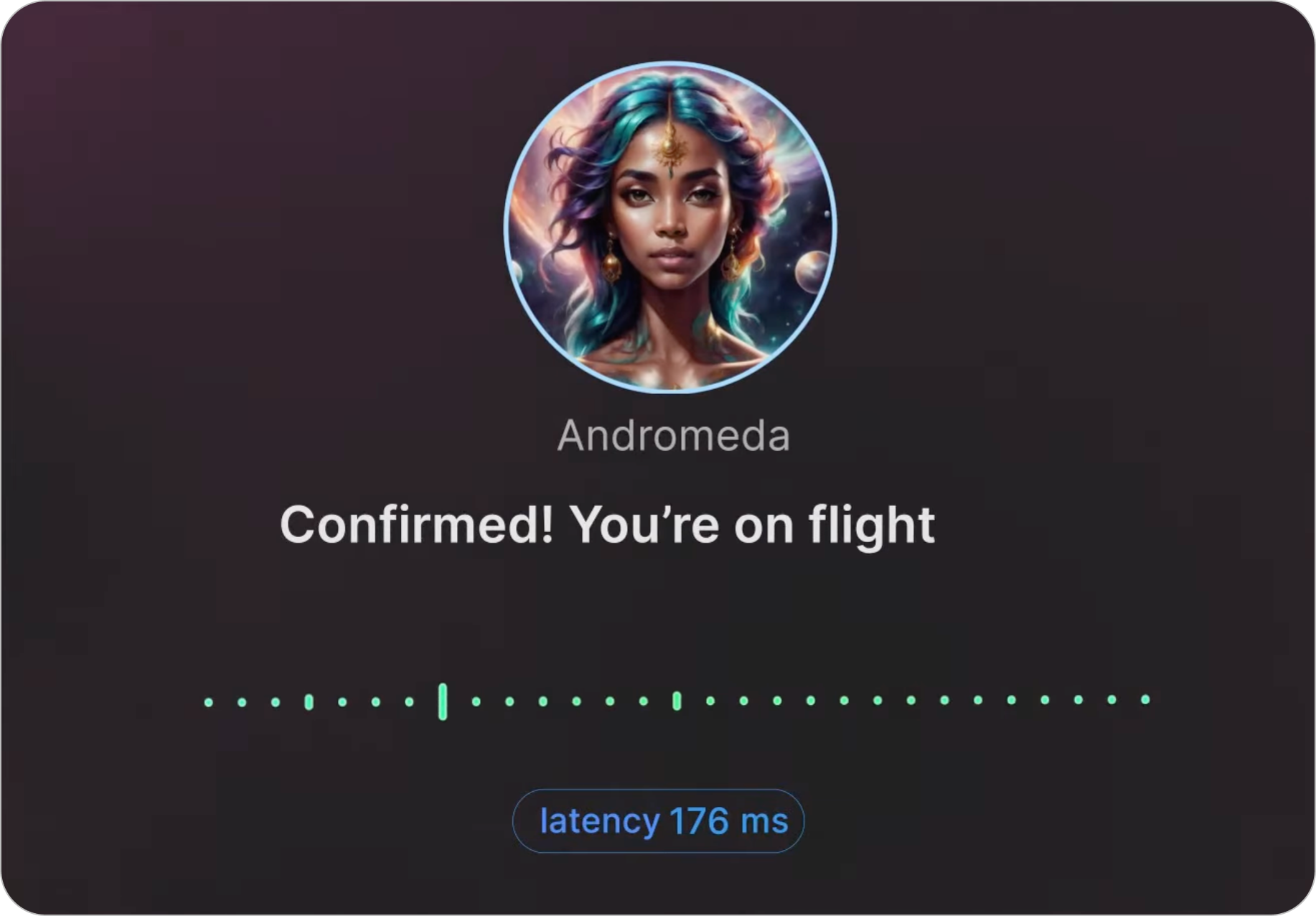
Deepgram's Aura-2 text-to-speech model is designed for enterprise applications, with over 40 voices and a time-to-first-byte of under 200 milliseconds. The ability to offer both speech-to-text and text-to-speech through a unified API is a significant advantage for developers building voice-enabled applications.
The Nova-3 speech-to-text model has received positive reviews for accuracy in real-world conditions, including challenging audio with background noise. Deepgram also offers the ability to train custom models for specific use cases, which can significantly improve recognition of industry-specific terminology.
However, there are some limitations to consider:
Language support:30+ languages compared to 100+ offered by alternatives
Code-switching: Multi-language mode is limited to specific language pairs (primarily English and Spanish). Language detection works on pre-recorded clips but has limitations with live audio
Entity recognition: Users have reported inconsistencies with accent handling and precise transcription of entities like email addresses, names, and spelled-out sequences
Pricing complexity: Like with AssemblyAI, usage-based pricing with separate charges for each add-on feature can make cost estimation difficult.
The strategic direction is also worth considering. Deepgram is building toward a complete voice AI stack (STT, TTS, and LLM orchestration). For teams building their own voice agents or applications, this means Deepgram could eventually offer competing products. Whether this is a concern depends on your use case and how you view vendor relationships.
Gladia focuses on speech AI infrastructure
Gladia has built its platform with a different philosophy: remain a pure-play speech AI infrastructure provider and let customers build whatever they want on top.
While competitors expand into voice agents, LLMs, and end-to-end solutions, Gladia has explicitly committed to staying focused on the transcription and audio intelligence layer.
This "partner, not competitor" positioning matters for companies building voice-enabled products. If your STT provider starts offering voice agent solutions, there's inherent competitive tension. Gladia's commitment to optimizing the "input side" only means teams can build with confidence that their infrastructure provider won't become a competitor.
The platform was designed real-time first, async-ready, built from the ground up for conversational use cases rather than adapting an async product for real-time.
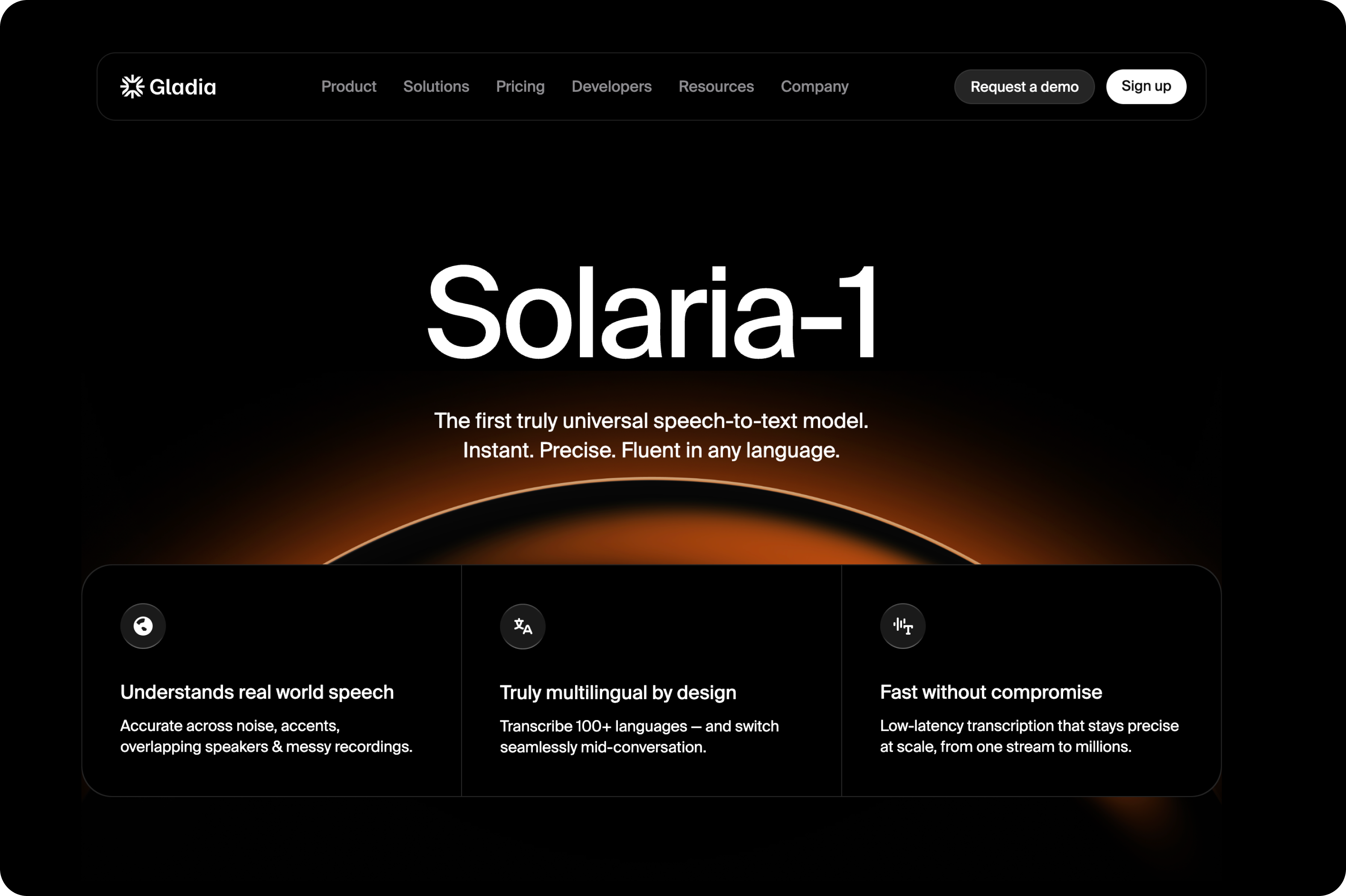
The Solaria ASR model delivers partial latency (time to first transcript output) that benchmarks faster than Deepgram, which has long been considered the industry speed leader. For voice agents where natural conversational flow depends on minimizing response delays, this matters. Solaria is also specifically engineered to reduce hallucinations with real-life, noisy audio, a common problem where speech-to-text models generate text that wasn't actually spoken. For enterprise applications where transcript accuracy has legal or compliance implications, this is a meaningful capability.
Gladia supports over 100 languages with native code-switching, the ability to accurately transcribe when speakers switch languages mid-conversation, even within the same sentence.
Unlike competitors where code-switching is limited to specific language pairs, Gladia handles language transitions across its full language set. This is increasingly important for global businesses, multilingual customer support, and media companies serving diverse audiences. As a European company, Gladia was built multilingual by design, and this edge is one of the top reasons customers choose Gladia over competitors.
Beyond general accuracy (measured by word error rate), Gladia emphasizes precision, including accurately transcribing specific entities like email addresses, names, numbers, and spelled-out sequences.
Its features like custom vocabulary and named entity recognition allow users to prompt the model with specific terminology, improving entity detection for domain-specific applications. Gladia's custom vocabulary implementation is particularly notable for its dynamic, per-user, per-language, and per-term weighting, enabling precision in medical, financial, and legal domains.
Gladia's approach to pricing differs from competitors.
Rather than charging separately for each feature, speech intelligence capabilities like speaker diarization, sentiment analysis, custom vocabulary, and named entity recognition are bundled and included in the quoted price. This eliminates the cost uncertainty that comes with à la carte pricing models where adding features multiplies the per-hour rate.
The European headquarters and infrastructure provide advantages for GDPR compliance.
Unlike competitors who use customer audio for model training by default and charge extra to opt out, Gladia never trains on customer data as a default policy. The platform defaults to European cloud providers and offers US East and West clusters for customers needing faster API response in those regions.
For support, Gladia emphasizes hands-on engagement as a startup advantage. Rather than treating customers as tickets in a queue, they assign dedicated technical teams who understand each customer's setup and goals.
Data retention can be customized, and customers can request deletion. Users on certain plans can opt out of having data used for model training at an additional cost (forgoing discounts). One consideration: data routes through U.S. infrastructure, which may have GDPR implications for European companies even without permanent storage.
Enterprise customers can control their data environment through private VPC deployments. The platform uses customer data for model improvement unless customers specifically opt out, which may require paid tier access.
Gladia takes the strongest default stance on data privacy.
It doesn’t use customer audio to retrain models. This isn't an opt-out you need to request or pay for; it's the default policy. For Gladia, customer data is not a bargaining chip or an upsell opportunity. Enterprise customers can choose enhanced data retention policies where transcriptions are deleted promptly.
For organizations handling sensitive conversations (healthcare consultations, legal proceedings, financial discussions, customer support calls) this difference in default behavior matters. Gladia's approach means confidential audio never contributes to model training, period.
Developer experience and integration matter
AssemblyAI provides comprehensive documentation and SDKs for Python and Node.js.
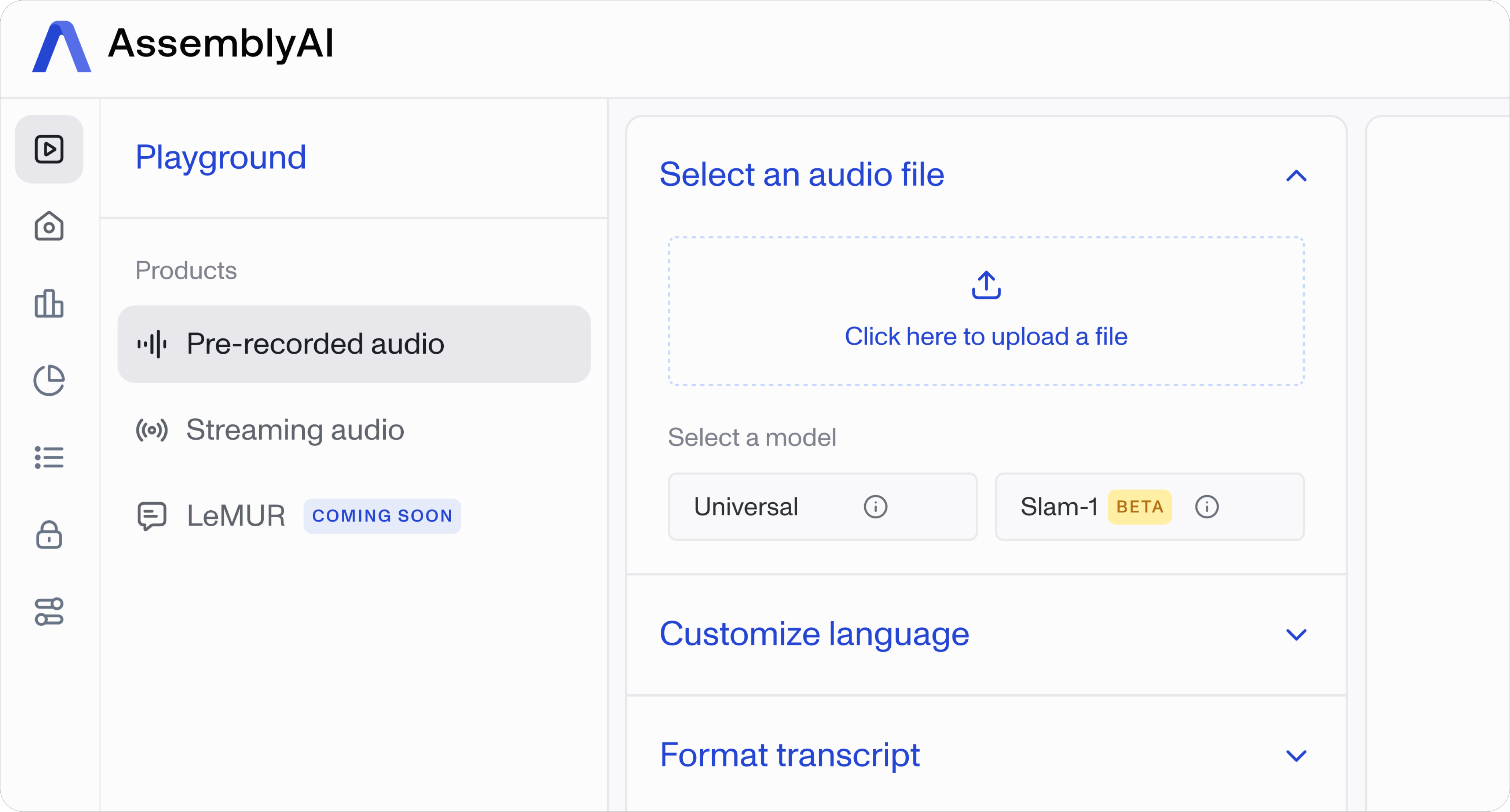
The Developer Hub centralizes API reference, cookbooks, and code examples. The no-code Playground allows testing without writing code. The LeMUR framework adds complexity but enables powerful audio intelligence capabilities.
Deepgram offers SDKs for Python, JavaScript, Go, and .NET.
Documentation emphasizes quick starts, with claims of achieving first transcription in under 10 minutes. Starter Apps provide pre-built integrations. The company maintains an active developer community through Discord.
Gladia provides SDKs for Python and TypeScript, with documentation organized from quickstart to advanced features.
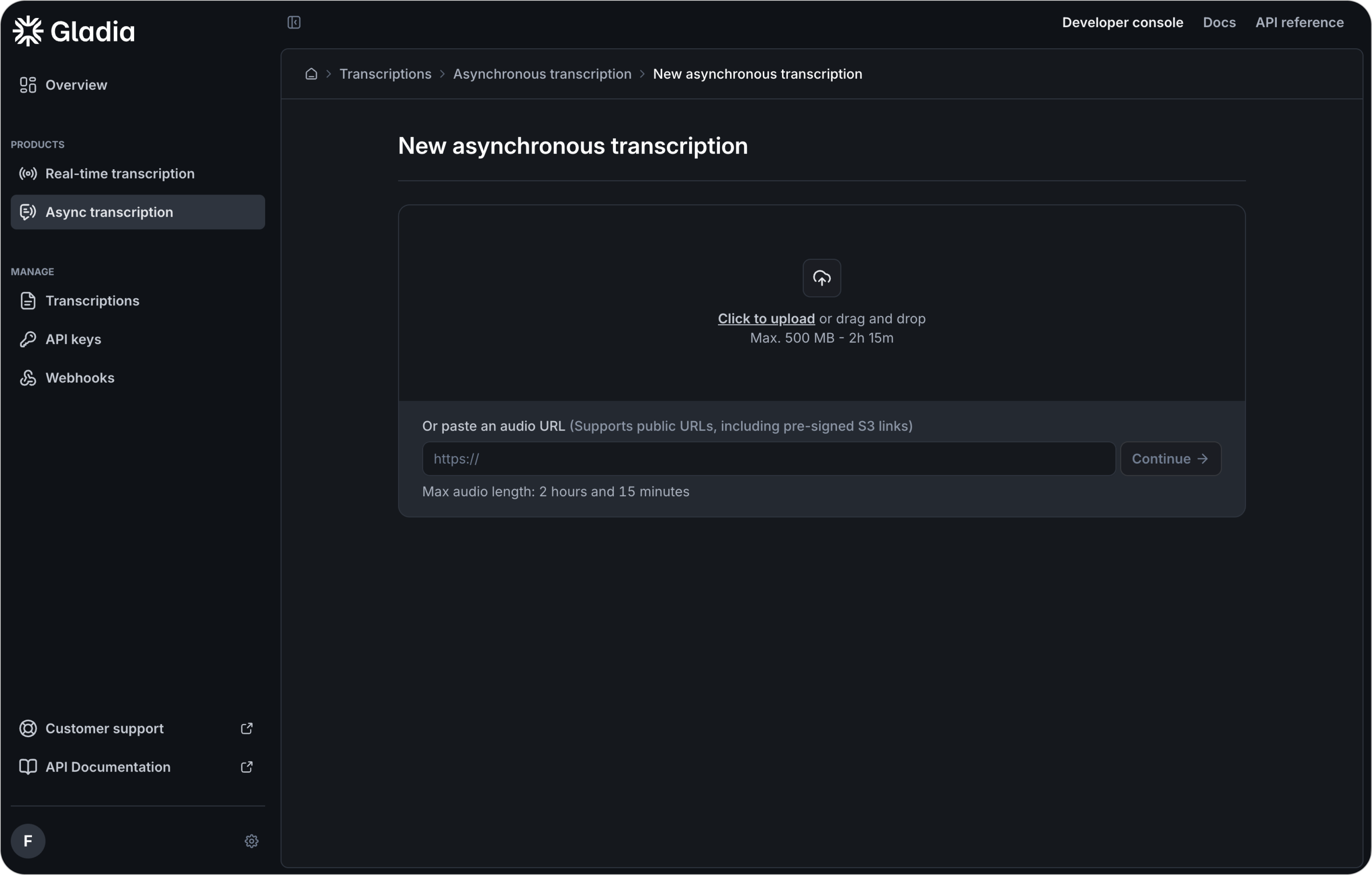
The Playground enables testing without code. Integrations with platforms like Livekit, Vapi, Twilio, Recall, and Pipecat simplify development for specific use cases (see the full partners page for more integrations). User feedback often highlights responsive customer support and the ability to work directly with technical teams, something that's harder to access with larger providers.
For real-time applications, all three platforms use WebSocket connections for streaming transcription, achieving sub-300ms latency. Gladia's Solaria model offers faster partial latency (time to first output), which can improve conversational flow in voice agent applications.
AssemblyAI vs Deepgram vs Gladia: Which should you choose?
The right choice depends on your specific requirements, priorities, and how you think about vendor relationships.
Choose AssemblyAI if:
You need to combine transcription with LLM-powered analysis and insights
Your primary use case involves extracting information, summaries, or answers from audio content
You're building applications that require advanced audio intelligence like topic detection and sentiment analysis
You work primarily with English content and batch/async transcription (note: real-time performance has limitations for conversational AI)